
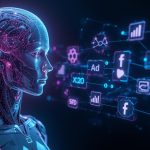






Running ad campaigns across multiple platforms—Google, Facebook, Instagram, LinkedIn, TikTok, and beyond—can feel like juggling flaming torches. Each channel has its own audience, format, analytics, and algorithm. For marketers, that means endless monitoring, optimization, and decision-making.
Fortunately, Artificial Intelligence (AI) is transforming how businesses handle this complexity. AI-powered tools are now central to managing multi-channel advertising—automating repetitive tasks, analyzing cross-platform data, and making smarter, faster decisions than ever before.
In this post, we’ll explore how AI tools simplify multi-channel ad management, which platforms are leading the charge, and how you can use them to achieve better performance and efficiency in 2025.
- The Challenge of Multi-Channel Advertising
Before we dive into the AI solutions, let’s understand the challenge.
Today’s consumer doesn’t live on a single platform. They might discover your brand on Instagram, read reviews on Google, watch tutorials on YouTube, and finally make a purchase after seeing a LinkedIn ad. Managing all those touchpoints manually is nearly impossible.
Each channel requires:
- Unique creative assets and ad formats
- Distinct targeting and bidding strategies
- Real-time budget adjustments
- Ongoing performance analysis
Without automation, this becomes a full-time job for multiple people. That’s where AI comes in—bridging data silos and orchestrating campaigns across platforms with precision and intelligence.
- How AI Simplifies Multi-Channel Campaign Management
AI tools for advertising operate on a simple principle: learn, predict, and optimize.
They gather performance data from every channel, analyze it using machine learning algorithms, and automatically adjust campaigns to maximize return on ad spend (ROAS).
Here’s how AI transforms the process:
- Centralized data integration: AI tools consolidate insights from Google Ads, Meta Ads, LinkedIn, and more into a single dashboard.
- Cross-channel attribution: AI determines which channels contribute most to conversions, enabling smarter budget allocation.
- Dynamic optimization: Algorithms automatically tweak bids, targeting, and creative assets based on performance trends.
- Predictive modeling: AI forecasts which channels or audiences will deliver the best results in future campaigns.
In short, AI acts as a full-time campaign manager—analyzing data 24/7, learning continuously, and adjusting strategy in real time.
- Google’s AI-Powered Multi-Channel Solutions
When it comes to integrated campaign management, Google Ads has evolved into an AI-driven powerhouse.
The Performance Max campaign type is a prime example. It uses machine learning to run ads across Search, Display, YouTube, Discover, Gmail, and Maps—all under one campaign structure.
Advertisers simply set goals (like lead generation or sales) and upload creative assets. Google’s AI handles the rest—choosing the right placements, audiences, and bid strategies to meet those objectives.
Additionally, Google Analytics 4 (GA4) integrates with AI to track user interactions across devices and channels, providing a holistic view of campaign performance. Together, these tools reduce guesswork and give marketers a unified strategy for Google’s entire ecosystem.
- Meta Advantage+ for Cross-Platform Social Ads
Meta’s Advantage+ suite is another standout AI-driven solution for managing ads across Facebook, Instagram, and Messenger.
Advantage+ campaigns automate audience targeting, creative testing, and bidding strategies using AI models trained on billions of interactions.
For example:
- Advantage+ Shopping Campaigns automatically find high-value shoppers across Meta’s platforms.
- Dynamic Creative Optimization tests multiple combinations of headlines, images, and CTAs to deliver the best-performing version for each user.
- AI audience expansion allows Meta to find lookalike audiences based on conversion behavior, not just demographics.
For social-first brands, Meta’s AI tools simplify multi-channel ad management by reducing manual testing and improving scalability.
- LinkedIn and B2B AI Targeting
B2B advertisers face a different challenge: reaching decision-makers with specific job titles and industries across multiple touchpoints.
LinkedIn’s AI targeting tools help solve this by combining professional data with predictive analytics. The platform’s algorithms identify which audience segments are most likely to engage or convert, then automatically adjust bidding and delivery.
LinkedIn’s integration with tools like HubSpot, Salesforce, and Zapier further enhances multi-channel workflows—allowing marketers to synchronize AI insights from LinkedIn with email marketing and CRM campaigns for end-to-end optimization.
- Third-Party AI Tools for Multi-Channel Ad Management
While platform-native AI tools are powerful, third-party solutions bring everything together into one unified system. These tools connect to multiple ad networks, analyze data holistically, and automate campaign management across them all.
Here are some leading AI-driven tools used in 2025:
- AdRoll
AdRoll uses AI to create personalized ad experiences across web, social, and email channels. It automatically allocates budgets based on cross-channel performance and uses predictive analytics to identify which users are most likely to convert.
- Madgicx
Madgicx integrates with Facebook, Google, and TikTok Ads, providing AI-driven recommendations for creative testing, bidding, and audience segmentation. Its “Creative Insights” feature uses machine learning to identify which visuals and messages drive engagement.
- Revealbot
Ideal for performance marketers, Revealbot automates ad optimization using custom AI rules. You can set parameters (like cost-per-click thresholds), and the AI adjusts campaigns across Meta, Google, and Snapchat in real time.
- Smartly.io
Smartly.io combines AI creative testing with automated campaign management for social and display ads. It helps large brands maintain consistent messaging across channels while optimizing assets for each platform’s unique format.
- Albert AI
Albert AI is a fully autonomous marketing platform that manages campaigns from start to finish. It integrates data from Google, Bing, and social networks, automatically testing thousands of audience and creative combinations to find the top performers.
These tools don’t just save time—they eliminate blind spots, ensuring that marketers make decisions based on unified, cross-channel intelligence.
- AI-Powered Budget Optimization
One of the hardest parts of multi-channel management is deciding where to spend your budget.
AI tools handle this with predictive allocation. By analyzing campaign performance and conversion paths, AI determines which channels deliver the highest value and dynamically shifts budgets accordingly.
For instance, if AI detects that TikTok ads are outperforming YouTube for a specific demographic, it will automatically increase TikTok’s budget share while reducing spend elsewhere.
This ensures every dollar works harder—no more overinvesting in underperforming channels.
- Creative Optimization Across Channels
Different platforms favor different formats—what works on LinkedIn may flop on Instagram. AI tools simplify this through creative optimization.
Using image recognition and natural language processing, AI can analyze which ad visuals, headlines, or CTAs perform best across platforms. It then generates or recommends optimized variations for each channel.
For example:
- AI might learn that bold, short headlines perform best on TikTok, while detailed benefit-driven text converts better on LinkedIn.
- Based on this insight, it automatically tailors your ad creatives for each environment without losing brand consistency.
This data-driven creative refinement ensures your message stays effective no matter where it appears.
- Cross-Channel Attribution and Reporting
Understanding the customer journey across multiple touchpoints has always been a marketer’s nightmare. AI finally provides clarity.
AI-based attribution modeling uses machine learning to identify which channels and interactions truly drive conversions. Instead of giving all credit to the “last click,” AI recognizes the value of every step—from the first Instagram impression to the final Google search.
Modern tools visualize this journey in intuitive dashboards, helping marketers make informed strategic decisions based on data, not assumptions.
- Predictive Analytics for Future Campaigns
Beyond automation and reporting, AI’s greatest strength is prediction.
By analyzing historical performance data, AI models can forecast which audiences, creatives, and channels will perform best in upcoming campaigns. This predictive intelligence helps advertisers plan proactively instead of reactively.
For example, an AI system might predict that engagement rates for travel ads will spike three weeks before holiday seasons and automatically adjust campaign timing and spend.
Predictive analytics turns AI from a reactive optimizer into a forward-thinking strategist.
- The Human-AI Collaboration
Despite all this automation, the human element remains essential. AI can process data, identify trends, and optimize logistics—but it can’t replace creative storytelling or brand strategy.
The best results come when marketers use AI as a partner, not a replacement. Humans bring empathy, cultural understanding, and intuition; AI brings speed, precision, and analytical power. Together, they create campaigns that are not only efficient but emotionally resonant.
Conclusion: The Future of Multi-Channel Advertising
As advertising ecosystems expand, AI tools are no longer optional—they’re essential. They unify fragmented data, automate optimization, and help marketers deliver cohesive campaigns across every channel and device.
By embracing AI-driven platforms—whether native tools like Google Performance Max or third-party solutions like Madgicx and Smartly.io—businesses can achieve consistency, efficiency, and scalability in ways that were once unimaginable.
In 2025 and beyond, the marketers who thrive won’t be the ones working harder across platforms—they’ll be the ones who let AI work smarter for them.


