
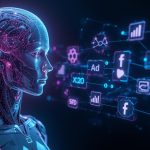






In digital marketing, one truth remains constant: not every visitor converts on their first interaction. In fact, studies show that over 95% of website visitors leave without making a purchase. They browse, compare, get distracted, or simply hesitate. Retargeting exists to bring these lost visitors back — but the old approach of following users with the same repetitive ads has become less effective and, frankly, annoying.
Enter Artificial Intelligence (AI). With its ability to analyze complex user behavior, predict intent, and personalize outreach, AI is transforming retargeting into a smarter, more empathetic, and data-driven practice.
In this blog, we’ll explore how AI revolutionizes retargeting by making it more relevant, less intrusive, and far more efficient. You’ll discover how machine learning models can help brands reconnect with potential customers in ways that feel meaningful — not mechanical.
- Understanding Retargeting in the Modern Era
Retargeting (or remarketing) is the process of re-engaging users who have previously interacted with your brand — visited your website, viewed a product, or added items to their cart — but didn’t complete a conversion.
Traditional retargeting relies heavily on cookies and static rules. For example:
- If a user views a product but doesn’t buy, show them that same product ad for the next 7 days.
- If a user adds something to the cart but abandons checkout, display a “Don’t forget your cart!” message.
While these tactics used to work, they’ve lost effectiveness due to ad fatigue and privacy changes. Users today expect contextual relevance and personalization — not one-size-fits-all reminders.
That’s where AI-driven retargeting changes the game.
- How AI Enhances Retargeting Campaigns
AI doesn’t just automate retargeting; it intelligently optimizes it. Using advanced analytics, it examines behavior patterns across multiple touchpoints — website interactions, email engagement, social media activity, and even offline data — to determine why someone didn’t convert and what might bring them back.
Here’s how AI elevates traditional retargeting:
- Dynamic personalization: AI tailors ads based on the user’s exact interests, demographics, and stage in the customer journey.
- Predictive modeling: It forecasts which users are most likely to return and convert, prioritizing ad spend accordingly.
- Context awareness: AI understands when, where, and how to deliver messages — adapting in real time to ensure relevance.
- Creative optimization: Machine learning tests different visuals and copy variations automatically, selecting the top performers.
In short, AI-driven retargeting turns guesswork into precision targeting.
- The Role of Machine Learning in Predicting Intent
At the heart of AI-powered retargeting lies machine learning (ML) — the ability of systems to learn and improve from data without explicit programming.
In retargeting, ML models analyze countless data points to detect patterns of user intent. These include:
- Time spent on specific pages
- Scroll depth and engagement signals
- Frequency of visits
- Abandoned cart contents and pricing sensitivity
- Referral sources and device usage
Based on this data, ML algorithms assign conversion likelihood scores to users. High-intent users receive tailored ads with stronger calls-to-action or time-limited offers, while low-intent users might get softer, brand-awareness messages.
This ensures your budget is spent where it matters most — on users who actually have a realistic chance of converting.
- Dynamic Creative Optimization: Personalization at Scale
One of the most powerful ways AI improves retargeting is through Dynamic Creative Optimization (DCO).
Instead of showing the same generic ad to every user, DCO systems automatically generate and test thousands of ad variations in real time. AI determines which combination of elements — imagery, headlines, copy, color, and call-to-action — resonates best with each individual.
For example:
- A user who browsed running shoes might see a dynamic ad featuring the exact shoe model they viewed, paired with a “Free Shipping Today Only” message.
- Another user who viewed winter coats could see a weather-based ad that says, “Stay warm this week — 15% off outerwear!”
AI handles all this dynamically, ensuring every impression is contextually relevant and emotionally resonant.
- Predictive Retargeting: Acting Before Customers Disappear
Traditional retargeting reacts after the user leaves your site. Predictive retargeting, powered by AI, acts before they disengage.
Through predictive analytics, AI detects early warning signs of drop-off. For example, it might recognize that a user’s session time is decreasing, or that their engagement pattern suggests waning interest. In response, the system can trigger proactive actions like:
- Sending an email reminder or discount code.
- Adjusting website recommendations in real time.
- Showing an exit-intent pop-up with a special offer.
This predictive layer reduces churn and boosts conversions by anticipating customer behavior rather than just reacting to it.
- Smarter Audience Segmentation
Gone are the days of simple audience buckets like “cart abandoners” or “past visitors.” AI uses micro-segmentation to group users based on nuanced behavioral and emotional traits.
For instance, AI can identify segments such as:
- Price-sensitive browsers who only convert during sales.
- Brand-loyal visitors who engage with storytelling ads.
- Impulse buyers who respond to limited-time offers.
- Window shoppers who need multiple touchpoints before converting.
With these insights, marketers can craft retargeting messages tailored to each behavioral group — making ads feel natural, not pushy.
- Cross-Channel Retargeting: AI Breaks the Silos
Modern consumers interact with brands across multiple channels — from search engines and social media to email and mobile apps.
AI excels at connecting these dots. It unifies data from various platforms to create a 360-degree customer view, allowing retargeting messages to remain consistent and intelligent across every touchpoint.
Here’s how that might look:
- A user visits your website and views a product.
- Later, AI triggers a YouTube video ad showcasing the same product in action.
- Then, it sends an email reminder with personalized product recommendations.
- Finally, it delivers a follow-up social ad featuring user reviews for added credibility.
Each step feels coordinated — because AI ensures continuity in tone, message, and timing across channels.
- Real-Time Decision-Making and Budget Optimization
AI also brings speed and efficiency to retargeting management. Instead of manually analyzing reports and reallocating budgets, AI does it automatically.
In real time, the system identifies which ads or audiences drive the best results and redirects resources accordingly. For instance:
- If Facebook retargeting outperforms Google Display ads, AI increases the Facebook budget.
- If mobile ads generate higher conversions than desktop, spend shifts dynamically.
This automation ensures maximum return on ad spend (ROAS) without the need for constant manual intervention.
- Ethical and Privacy Considerations
As AI enables hyper-personalized retargeting, marketers must handle user data responsibly. With privacy regulations like GDPR and CCPA in effect, transparency and consent are crucial.
AI can actually help with compliance by:
- Using anonymized data models instead of personal identifiers.
- Ensuring frequency caps to avoid overexposure.
- Analyzing aggregate behavioral trends rather than tracking individuals directly.
Ethical AI in retargeting focuses on value-driven personalization — offering relevance without intrusion.
- Future Trends: The Next Generation of AI Retargeting
The next wave of AI-powered retargeting is even more exciting. Emerging technologies are pushing personalization to new heights:
- Generative AI will craft custom ad creatives on demand, tailoring visuals and copy per user.
- Emotion AI will detect sentiment and mood, adjusting messaging tone accordingly.
- Voice and conversational AI will re-engage customers through personalized chatbot and voice assistant reminders.
- Predictive lifetime value (LTV) modeling will help brands focus retargeting on users with the highest long-term profitability.
In essence, AI won’t just re-engage lost customers — it will predict and prevent disengagement altogether.
- The Human + AI Partnership
Despite its intelligence, AI doesn’t replace human creativity or empathy. The best results come from combining AI-driven insights with human storytelling.
Marketers can use AI to identify patterns and opportunities but rely on their own understanding of emotion, culture, and brand tone to craft authentic messages. Together, they create retargeting experiences that feel both personal and purposeful.
Conclusion: Retargeting That Feels Human Again
Retargeting used to be mechanical — chasing customers with repetitive ads. But with AI, it’s becoming smarter, contextual, and even compassionate.
By analyzing data in real time, predicting user intent, and tailoring messages at scale, AI allows brands to re-engage lost customers in ways that feel helpful rather than invasive. It shifts the focus from relentless reminders to meaningful re-engagement.
As we move into 2025, one thing is clear: AI-powered retargeting isn’t just about bringing customers back — it’s about understanding why they left and inspiring them to return.
In a world flooded with ads, relevance is the ultimate differentiator. And with AI, retargeting finally achieves what it always promised — personalized, data-driven marketing that feels human.


