
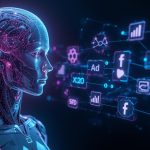






In the past, advertising was all about creativity, timing, and a bit of luck. Marketers relied on intuition, demographic guesses, and manual processes to place ads where they hoped their audiences would see them. Fast forward to 2025, and the game has completely changed.
Today, Artificial Intelligence (AI) has taken center stage in advertising, revolutionizing how brands reach, engage, and convert audiences. One of the most transformative innovations in this revolution is programmatic marketing—the automated buying and selling of digital ad space powered by AI algorithms.
Programmatic advertising is not just a trend; it’s the backbone of modern marketing campaigns. It allows advertisers to target specific audiences with precision, optimize ad performance in real time, and make data-driven decisions that deliver measurable ROI.
In this blog, we’ll explore what programmatic marketing is, how AI powers it, and why it’s reshaping the entire digital advertising landscape.
What Is Programmatic Marketing?
Programmatic marketing is the use of AI and machine learning to automate the process of purchasing and placing ads online. Instead of negotiating directly with publishers or manually managing campaigns, advertisers use AI-driven systems to buy ad impressions in real time.
Imagine it like a digital auction that happens in milliseconds—every time a user visits a website or app, AI determines whether that person fits the advertiser’s target audience. If they do, the system automatically bids for that ad placement and displays the most relevant message to the user.
This process is known as real-time bidding (RTB), and it forms the foundation of programmatic advertising.
But beyond automation, programmatic marketing also brings intelligence. It doesn’t just buy ad space—it continuously learns, analyzes, and optimizes campaigns to ensure every ad dollar delivers maximum value.
The Role of AI in Programmatic Advertising
At the heart of programmatic marketing lies Artificial Intelligence. AI algorithms analyze vast amounts of data to make instantaneous decisions about which ad to show, to whom, and when.
Here’s how AI supercharges programmatic advertising:
- Real-Time Decision Making:
AI processes billions of data points in milliseconds—far faster than any human could. It decides which ad is most relevant to a particular user at the exact moment they’re online. - Audience Insights:
AI uses behavioral data, browsing history, location, device type, and even time of day to predict what each user is likely to respond to. - Dynamic Optimization:
Once ads are live, AI constantly monitors performance metrics like click-through rates (CTR) and conversions, automatically adjusting bids and targeting for better results. - Predictive Analytics:
Machine learning models forecast future trends—such as which audiences will perform best—allowing marketers to plan smarter campaigns.
AI ensures every ad impression counts, transforming marketing from guesswork into a precise science.
How Programmatic Marketing Works
To understand AI’s impact, let’s break down the programmatic process step-by-step:
- Data Collection:
The journey starts with data—first-party (from your brand), second-party (partner data), and third-party (external sources). This information feeds the AI system with insights about target audiences. - Audience Targeting:
AI analyzes this data to create audience profiles based on behaviors, preferences, and intent. These profiles guide the system in selecting where and how ads appear. - Real-Time Bidding (RTB):
When a user visits a webpage, an automated auction begins. AI evaluates whether that user matches your target profile and bids for the ad space in real time. - Ad Placement:
The winning ad is displayed instantly—often within 100 milliseconds. - Performance Optimization:
After placement, AI monitors engagement data and continuously refines targeting, messaging, and bidding strategies for ongoing improvement.
This automated ecosystem ensures that ads reach the right person at the right time on the right platform—all without manual intervention.
Benefits of AI-Powered Programmatic Advertising
AI has elevated programmatic marketing from efficient to extraordinary. Here’s how it’s transforming advertising for the better:
- Precision Targeting
AI digs deeper than basic demographics. It identifies high-value audiences based on online behavior, search intent, and contextual relevance. Marketers can target individuals who are most likely to convert—maximizing ROI and minimizing wasted ad spend.
- Real-Time Optimization
Traditional campaigns require constant manual adjustments. AI eliminates that need. It evaluates ad performance in real time, tweaking creative elements, budgets, and placements automatically to ensure peak efficiency.
- Enhanced Personalization
AI allows brands to deliver personalized messages at scale. Whether it’s customized offers, product recommendations, or localized ads, every interaction feels relevant and timely.
- Cost Efficiency
By automating the bidding process and reducing human error, AI ensures that marketers pay only for the impressions that matter. It allocates budgets intelligently across channels and audiences.
- Multichannel Integration
AI-powered programmatic systems operate across display, video, mobile, social media, and even connected TV. This creates seamless, cross-channel advertising experiences that amplify brand visibility.
Types of Programmatic Advertising
Not all programmatic ads are the same. Here are the primary types of programmatic buying methods:
- Real-Time Bidding (RTB):
The most common model—open auctions where advertisers bid for each impression. - Private Marketplaces (PMP):
Invitation-only auctions that give advertisers access to premium publishers. - Programmatic Direct:
Fixed-price deals where advertisers purchase specific inventory without bidding. - Preferred Deals:
Negotiated one-on-one between advertisers and publishers, giving priority access before open auctions begin.
Each model serves different strategic goals, and AI helps determine which method delivers the highest performance for each campaign.
AI and Creativity: A Perfect Partnership
One common misconception is that programmatic advertising removes creativity from marketing. In truth, AI amplifies it.
With AI handling the analytical heavy lifting—data sorting, targeting, and optimization—creative teams have more time to focus on storytelling and design.
AI also enables Dynamic Creative Optimization (DCO), where ad elements like visuals, headlines, and CTAs automatically adjust to match the viewer’s preferences or location. For example:
- A travel company can show beach images to users in cold regions and city tours to urban travelers.
- An e-commerce brand can promote items related to what a user recently browsed.
This fusion of AI and creativity produces hyper-relevant ads that feel both intelligent and personal.
Challenges of AI in Programmatic Advertising
While AI-powered advertising offers immense benefits, it’s not without challenges:
- Data Privacy and Ethics:
With stricter regulations like GDPR and CCPA, marketers must ensure AI uses data responsibly and transparently. - Ad Fraud:
Automated systems can be vulnerable to bots and fake impressions. AI tools are being developed to detect and prevent such fraudulent activities. - Overreliance on Automation:
While AI handles optimization, human oversight remains essential for strategy, brand tone, and ethics. - Complexity:
Understanding AI systems requires technical expertise, and integrating multiple data sources can be challenging for smaller teams.
Addressing these challenges requires a balance between automation and human intelligence—leveraging technology while maintaining ethical, creative control.
Real-World Examples of AI in Programmatic Marketing
- Spotify: Uses AI to deliver personalized audio ads based on user listening habits and moods.
- Coca-Cola: Employs AI-driven audience segmentation to optimize global ad campaigns in real time.
- The Economist: Increased subscriptions using predictive algorithms that targeted users likely to engage with its content.
These success stories show how AI transforms advertising from a broadcast medium into a precision-targeted, performance-driven strategy.
The Future of Programmatic Marketing
As AI continues to evolve, programmatic marketing is entering a new era. Emerging technologies will push automation and personalization even further:
- Predictive Bidding: AI will anticipate which impressions will convert before bidding even begins.
- Voice and Connected TV Ads: Programmatic will expand to voice assistants and streaming platforms.
- Ethical AI Models: Systems will become more transparent, ensuring fairness and accountability.
- Emotion-Based Targeting: Future algorithms may analyze facial expressions or tone of voice to deliver emotionally relevant ads.
The goal isn’t just efficiency—it’s to make advertising more human by using AI to understand and anticipate real human needs.
Conclusion: A Smarter Way to Advertise
AI has transformed programmatic marketing into a dynamic, data-driven engine for success. It eliminates guesswork, enhances personalization, and ensures every ad impression serves a purpose.
In 2025, the brands leading the advertising game aren’t necessarily the biggest—they’re the smartest. Those who harness AI’s predictive power and pair it with human creativity are setting new benchmarks for what’s possible.
Programmatic marketing isn’t just changing the way we buy ads—it’s changing the way we connect with audiences. And as AI continues to evolve, the future of advertising will be not only more efficient but also more intelligent, personal, and impactful than ever before.


