
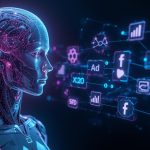






Artificial Intelligence (AI) is transforming industries at an unprecedented pace, and marketing is no exception. Beyond streamlining operations and automating tasks, AI is reshaping consumer behavior and decision-making processes, subtly influencing how people perceive brands, make choices, and engage with products. By leveraging data, predictive algorithms, and personalized experiences, AI is altering the psychological landscape of consumption, creating opportunities and challenges for businesses worldwide.
Understanding how AI is influencing consumer psychology is critical for marketers, behavioral scientists, and brand strategists. This article explores the ways AI is reshaping decision-making, attention, trust, and engagement, and what this means for the future of consumer behavior.
- Personalized Experiences Influence Consumer Decisions
One of the most significant ways AI affects consumer psychology is through hyper-personalization. Today, AI analyzes vast amounts of data—from browsing behavior and purchase history to social media interactions—to create experiences tailored to individual preferences.
Personalized recommendations on platforms like e-commerce sites or streaming services are a prime example. When consumers see products or content specifically aligned with their tastes, they experience a sense of validation and attention, which reinforces engagement and encourages purchases.
Psychologically, this taps into the principle of personalization bias, where people are more likely to act on options that feel personally relevant. As AI becomes more sophisticated, these experiences are predicted to become real-time and contextually aware, further influencing decisions at the subconscious level.
- Predictive AI Shapes Anticipated Needs
Predictive algorithms are changing the way consumers approach decision-making. AI can analyze patterns in behavior and forecast future desires or needs, allowing brands to anticipate and present offers before the consumer actively searches for them.
For example, AI can predict when a consumer is likely to run out of a particular product and automatically send reminders or offers. Psychologically, this creates a sense of effortless convenience, encouraging loyalty and reducing the mental load associated with decision-making.
This predictive influence aligns with the psychological principle of nudge theory, where subtle prompts guide behavior without explicit instruction. AI-driven recommendations, notifications, and reminders subtly shape choices, influencing what consumers perceive as desirable or urgent.
- AI Alters Perception of Trust and Credibility
Trust is a cornerstone of consumer psychology, and AI plays a nuanced role in shaping it. On one hand, AI-powered personalization and efficiency can increase trust, making consumers feel understood and supported. Chatbots, for instance, provide immediate assistance and accurate information, enhancing confidence in the brand.
On the other hand, over-reliance on AI can lead to perceived manipulation or intrusion, especially when consumers feel their data is being used without consent. The psychological effect of AI on trust depends largely on transparency and perceived control. Brands that clearly communicate how AI is used and provide opt-in options are more likely to strengthen trust and consumer loyalty.
- AI Reinforces Behavioral Patterns Through Feedback Loops
AI systems are designed to learn from consumer interactions, creating feedback loops that reinforce behavior. For instance, recommendation engines on streaming platforms suggest content based on viewing history. The more a consumer engages with AI suggestions, the more the AI refines future recommendations.
This feedback loop has a psychological effect: it reinforces preferences and habits, potentially shaping identity and lifestyle choices. While this can increase satisfaction and engagement, it also introduces the risk of narrowing perspectives or fostering dependency on algorithmic suggestions.
From a consumer psychology standpoint, AI-driven feedback loops create a dynamic in which individuals may increasingly rely on AI for decision-making, subtly shaping tastes, priorities, and even social behavior.
- Enhancing Emotional Engagement Through AI
AI is not just analytical—it is increasingly capable of recognizing and responding to emotional cues. Sentiment analysis, facial recognition, and natural language processing allow brands to gauge user mood and tailor interactions accordingly.
For example, AI chatbots can detect frustration in customer inquiries and respond empathetically, while recommendation engines may adjust content to match the user’s emotional state. These emotionally responsive interactions influence consumer psychology by creating perceived emotional connection, fostering loyalty, and enhancing satisfaction.
Psychologically, AI’s ability to respond to emotion taps into affective engagement, the emotional bond between consumer and brand, which is a powerful driver of long-term behavior and advocacy.
- Gamification and Reward Systems Influence Motivation
AI is often used to implement gamification and reward systems in consumer experiences. Loyalty programs, dynamic pricing incentives, and personalized discounts are examples where AI tracks behavior and rewards engagement in a targeted way.
The psychological impact of AI-driven rewards is significant: it leverages operant conditioning, where positive reinforcement encourages repetition of desired behaviors. Over time, consumers become conditioned to engage with AI-driven systems, increasing purchase frequency, platform usage, and brand loyalty.
By optimizing rewards based on predictive insights, AI enhances motivation and satisfaction, making consumer interactions feel more personalized, relevant, and gratifying.
- AI Reduces Cognitive Load
Making decisions can be mentally exhausting, especially in environments with countless options. AI helps reduce cognitive load by filtering choices and presenting the most relevant options to consumers.
For instance, AI-driven filters on e-commerce platforms help users find products aligned with their preferences quickly. By simplifying choices, AI alleviates decision fatigue, leading to faster purchases and greater satisfaction.
From a psychological perspective, this aligns with the principle of bounded rationality, where individuals make decisions based on simplified information rather than exhaustive analysis. AI acts as a cognitive aid, allowing consumers to make confident choices with minimal effort.
- Challenges and Ethical Considerations
While AI offers numerous advantages, its impact on consumer psychology raises several challenges:
- Manipulation Risks: AI can nudge behavior in subtle ways, potentially exploiting psychological biases without consumer awareness.
- Privacy Concerns: The extensive data required for AI personalization can cause unease if not handled transparently.
- Overreliance on Technology: As consumers depend more on AI, critical thinking and decision-making skills may diminish.
- Bias Reinforcement: AI systems trained on biased datasets may reinforce stereotypes or skew perceptions.
Brands must adopt ethical AI practices to maintain trust, transparency, and fairness, ensuring that AI supports consumer well-being rather than exploiting vulnerabilities.
- Preparing for an AI-Influenced Consumer Landscape
To thrive in a world where AI shapes consumer psychology, brands should consider the following strategies:
- Prioritize Transparency
Clearly communicate how AI is used, what data is collected, and how it benefits the consumer. Transparency fosters trust and mitigates privacy concerns.
- Balance Automation with Human Touch
AI can enhance efficiency and personalization, but human oversight ensures empathy, ethical judgment, and contextual understanding. Combining AI with human interaction provides the best of both worlds.
- Focus on Ethical Personalization
Use AI to create meaningful, relevant experiences without exploiting biases or psychological vulnerabilities. Ethical personalization enhances loyalty and long-term engagement.
- Monitor Behavioral Impacts
Track how AI-driven interventions influence consumer behavior. Understanding psychological responses allows marketers to optimize campaigns responsibly.
- Educate Consumers
Empower consumers to understand AI’s role in shaping their experiences. Knowledgeable consumers are more likely to engage positively and trust AI-driven interactions.
- Conclusion
AI is no longer just a tool for operational efficiency—it is actively shaping consumer psychology. By offering hyper-personalized experiences, predicting needs, reducing cognitive load, enhancing emotional engagement, and leveraging reward systems, AI is influencing how people think, feel, and make decisions.
For marketers, understanding these psychological dynamics is critical. AI should be viewed not as a replacement for human insight but as an augmentation tool that enhances engagement, satisfaction, and loyalty. By combining AI capabilities with ethical practices, transparency, and a focus on human-centric design, brands can navigate this new landscape effectively.
The rise of AI in consumer psychology presents a dual opportunity: businesses can create more personalized, efficient, and meaningful experiences, while consumers can benefit from reduced decision fatigue, tailored content, and enhanced interactions. However, responsibility, transparency, and ethical oversight remain crucial.
Ultimately, AI is reshaping the way consumers perceive, process, and act on information, marking a profound shift in the psychology of consumption. For brands, understanding this shift and leveraging AI thoughtfully will be key to remaining competitive in a world where human decisions are increasingly influenced by intelligent machines.


