
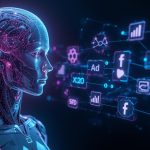






In today’s hyper-competitive digital landscape, every marketing dollar counts. Companies are under constant pressure to optimize budgets, streamline operations, and deliver measurable returns on investment (ROI). At the same time, the complexity of marketing has grown exponentially—multiple platforms, fragmented audiences, and data overload make it harder to manage campaigns efficiently.
This is where Artificial Intelligence (AI) has become a game-changer. By bringing automation, predictive insights, and personalization into marketing, AI doesn’t just enhance performance—it significantly reduces costs and boosts ROI. In 2025, it’s not an exaggeration to say that AI is rewriting the economics of marketing.
Let’s dive into how AI is helping businesses cut expenses, increase efficiency, and achieve higher returns than ever before.
- Smarter Audience Targeting Saves Ad Spend
One of the biggest drains on marketing budgets is inefficient ad targeting. Many companies still waste thousands of dollars showing ads to the wrong audience or overpaying for underperforming segments. AI changes that dynamic entirely.
AI-powered platforms analyze huge amounts of behavioral, demographic, and psychographic data to identify audiences most likely to engage or convert. Through machine learning algorithms, AI constantly refines audience segments based on real-time performance data.
For example, AI can detect patterns—like which types of users are most responsive to certain messages or at what times they’re most likely to purchase. This allows marketers to allocate their budgets with surgical precision, ensuring that every impression and click counts.
The result? Lower customer acquisition costs (CAC) and higher conversion rates, which together deliver a stronger ROI.
- Predictive Analytics Minimizes Waste and Maximizes Efficiency
Traditional marketing often relies on historical performance data and gut instinct. AI, on the other hand, uses predictive analytics to forecast what’s likely to happen next.
By analyzing patterns in user behavior, seasonal trends, and campaign performance, AI can predict which customers are likely to buy, which leads are worth nurturing, and which campaigns are most likely to deliver strong results.
This predictive power helps marketers avoid wasteful spending. Instead of launching broad campaigns and hoping something sticks, they can focus their efforts on audiences and messages with the highest probability of success.
For example, an e-commerce company might use predictive analytics to anticipate which customers are at risk of churning and target them with personalized retention offers—saving money by focusing only where it matters most.
- Automation Cuts Labor Costs and Boosts Productivity
Manual campaign management, data analysis, and content scheduling are time-consuming and expensive. Marketers often spend countless hours managing repetitive tasks—tasks that AI can now handle in seconds.
AI automation tools streamline processes like:
- Email segmentation and dispatching.
- Ad placement and budget adjustments.
- Social media scheduling and engagement tracking.
- Reporting and analytics generation.
This shift doesn’t just save time; it dramatically reduces labor costs. With AI managing the heavy lifting, marketing teams can focus on strategy, creativity, and innovation instead of routine operational tasks.
Moreover, AI’s efficiency means that fewer resources are needed to achieve the same or even better results. That translates directly into cost savings and a higher ROI per marketing dollar.
- AI-Driven Content Optimization Reduces Trial and Error
Content creation and promotion can be costly—especially when marketers rely on trial and error to determine what resonates. AI eliminates much of that uncertainty.
Through natural language processing (NLP) and machine learning, AI analyzes user engagement data to understand what kind of content performs best for different audiences. It can recommend optimal topics, keywords, tone, and even visual styles.
For example:
- AI can identify which blog topics are trending in your industry.
- It can analyze social media engagement to suggest content types that attract the most attention.
- It can even tailor website copy dynamically to each visitor’s preferences.
Instead of producing dozens of variations to test manually, AI helps marketers get it right the first time. This reduces production costs and increases the return on every piece of content created.
- Dynamic Pricing and Personalization Boost Profit Margins
AI doesn’t just reduce costs—it also enhances profitability through personalized pricing and offers.
Using real-time data, AI can adjust pricing or promotions based on individual customer behavior, demand trends, and competitive activity. For example, a travel site might offer a discount to a customer who’s shown high interest but hasn’t booked yet, while offering full price to someone who’s likely to convert without incentives.
This strategy maximizes revenue while minimizing unnecessary discounts. Over time, these small adjustments add up to major improvements in profit margins—and a better ROI on marketing efforts.
- AI Chatbots Reduce Customer Service Costs
Customer engagement is a vital part of marketing—but maintaining 24/7 human support can be extremely expensive. That’s where AI-powered chatbots come in.
Modern chatbots, powered by conversational AI, handle everything from answering FAQs and recommending products to assisting with checkout or troubleshooting. These bots can manage thousands of interactions simultaneously, at a fraction of the cost of human agents.
The benefits go beyond cost savings. AI chatbots also:
- Capture valuable customer data for marketing insights.
- Reduce response time, improving customer satisfaction.
- Operate continuously, increasing lead capture opportunities.
By combining customer service with marketing automation, chatbots not only save money but also contribute to revenue growth—enhancing ROI on both fronts.
- Programmatic Advertising Increases Ad Efficiency
Programmatic advertising is one of the most effective uses of AI in marketing. Instead of manually buying ad space, AI uses algorithms to purchase and place ads in real time, targeting the right audience with the right message at the right moment.
AI systems analyze massive datasets to determine:
- Which platforms are performing best.
- What bids are most efficient.
- When to adjust placements for optimal visibility.
This eliminates guesswork and ensures that marketers spend only on the most effective placements. Moreover, real-time optimization prevents budget waste by automatically redirecting spend from underperforming ads to high-performing ones.
Ultimately, programmatic advertising improves ROI by making every dollar work harder.
- Smarter Customer Retention Strategies
Acquiring a new customer is often five times more expensive than retaining an existing one. AI helps companies reduce marketing costs by improving customer retention and loyalty.
Through machine learning, AI analyzes customer data to identify churn signals—such as decreased engagement or a change in buying frequency. Once detected, it can trigger automated retention campaigns, such as targeted discounts, personalized emails, or loyalty rewards.
These efforts not only lower churn but also increase lifetime customer value (LCV), meaning each marketing dollar invested in retention yields greater long-term returns.
- Real-Time Performance Monitoring Prevents Overspending
One major reason for inflated marketing costs is late detection of underperforming campaigns. AI solves this problem through real-time analytics and optimization.
Instead of waiting until the end of a campaign to analyze results, AI systems continuously monitor key performance indicators (KPIs) like click-through rates, engagement, and conversions. If a campaign starts underperforming, AI can automatically adjust targeting, creative elements, or bidding strategies.
This dynamic approach ensures that resources are always directed toward what’s working, preventing unnecessary losses and improving overall campaign ROI.
- Enhanced Decision-Making Reduces Strategic Missteps
Poor strategic decisions can be far more costly than any individual campaign failure. AI empowers marketers with data-driven insights that minimize these risks.
AI tools aggregate data from multiple channels—social media, CRM systems, website analytics, and ad platforms—and translate it into actionable intelligence. This helps marketers identify trends, uncover new opportunities, and make smarter investment decisions.
By replacing assumptions with accurate forecasts, AI ensures that strategic planning is both cost-effective and result-oriented. The outcome? Lower wasted spend and a higher probability of campaign success.
The ROI Equation: Doing More with Less
AI doesn’t just cut costs—it redefines the concept of efficiency in marketing. By combining automation, personalization, and predictive insights, AI allows marketers to:
- Reach the right audience faster.
- Spend smarter across channels.
- Create content that converts.
- Retain customers longer.
These efficiencies collectively drive better ROI, often with reduced operational overhead.
For many businesses, adopting AI-driven marketing isn’t just about keeping up with the competition—it’s about achieving sustainable growth with fewer resources.
Conclusion: The Future Is Efficient, Intelligent, and Profitable
As we move deeper into the AI era, one thing is clear: marketing success will depend not just on creativity or budget size, but on intelligent optimization.
AI empowers brands to automate, analyze, and adapt with unparalleled accuracy—reducing costs while maximizing every marketing dollar’s impact.
In essence, AI transforms marketing from a cost center into a profit engine. The companies that recognize this shift and invest in AI-powered strategies today will be the ones enjoying higher ROI, lower expenses, and stronger competitive advantages tomorrow.


