
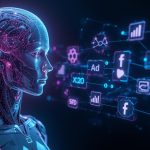






The marketing landscape is evolving faster than ever, driven by technological advances and shifting consumer expectations. At the heart of this transformation is Artificial Intelligence (AI), which is no longer just a buzzword but a fundamental force shaping how businesses engage with their audiences. From predictive analytics to personalized content and automated customer interactions, AI has already revolutionized marketing.
As we approach 2030, AI is expected to become even more sophisticated, integrated, and predictive, fundamentally changing the strategies marketers employ. Understanding the trajectory of AI in marketing is essential for businesses that want to remain competitive and maximize ROI in the years to come. This article explores the future of AI in marketing, emerging trends, and what marketers can expect by 2030.
- AI Will Drive Hyper-Personalization
One of the most significant trends in marketing is personalization at scale, and AI will take it to a new level by 2030. While personalization today often involves segmenting audiences and adjusting messaging based on general behaviors, future AI systems will deliver real-time, hyper-personalized experiences for individual users.
Imagine a website or app that adjusts not only its content but also its design, layout, and messaging based on a user’s predicted intent, mood, and preferences. AI will analyze multiple layers of data—from browsing history and social media activity to location and device usage—to predict what a visitor wants before they even search for it.
This level of personalization will improve engagement, conversions, and customer satisfaction, making marketing strategies more precise and less intrusive.
- Predictive Marketing Will Become Standard Practice
Predictive analytics is already a growing component of marketing, but by 2030, AI-powered predictive marketing will be the norm. Instead of reacting to customer behavior, marketers will anticipate needs and act proactively.
AI algorithms will forecast customer journeys, predict product interest, and identify the optimal timing for outreach. For example, an AI-driven marketing system could determine the exact moment a customer is most likely to convert and automatically trigger personalized offers, emails, or notifications.
This predictive capability will help businesses reduce wasted ad spend, improve customer retention, and enhance the efficiency of marketing campaigns. Companies that embrace predictive marketing will be able to focus their resources on high-value prospects while minimizing unproductive engagement.
- Conversational AI Will Redefine Customer Interaction
By 2030, AI-driven conversational tools, including chatbots and voice assistants, will become increasingly sophisticated and human-like. Current chatbots handle basic inquiries, but future AI will understand context, sentiment, and intent on a much deeper level.
Conversational AI will serve as a primary interface between brands and customers, guiding users through complex processes, recommending products, and even completing transactions in real time. For instance, a customer could speak naturally to a virtual assistant about a product, and the AI would provide personalized suggestions, apply discounts, and complete the purchase—all without human intervention.
This evolution will make customer experiences more seamless, intuitive, and efficient, while freeing human marketers to focus on strategy, creativity, and complex problem-solving.
- AI Will Optimize Content Creation and Distribution
Content marketing is a cornerstone of modern marketing, and AI will drastically enhance how content is created, distributed, and optimized. Today, AI tools can generate blog posts, social media captions, and ad copy. By 2030, AI will be capable of creating fully immersive and highly tailored content experiences.
This includes:
- Generating copy that adapts dynamically to individual preferences and behavior.
- Producing video, audio, and interactive media automatically tailored to audience segments.
- Suggesting the most effective distribution channels, timing, and messaging for maximum engagement.
AI will also analyze real-time feedback to refine content instantly, ensuring that messages resonate with audiences and remain aligned with evolving trends. The result will be content that is more relevant, engaging, and conversion-focused than ever before.
- Advanced Data Integration Will Power Smarter Decisions
By 2030, marketers will have access to an unprecedented volume and variety of data, and AI will be essential to make sense of it all. AI systems will integrate data from multiple sources—including websites, apps, social media, CRM platforms, IoT devices, and even offline interactions—to build a comprehensive understanding of customers.
This holistic view will allow marketers to create campaigns that are more intelligent, targeted, and measurable. For example, AI could identify correlations between browsing patterns, social media engagement, and purchase likelihood, enabling highly precise audience segmentation.
Advanced data integration will also enable real-time decision-making, allowing marketers to adjust campaigns instantly based on changing customer behavior or market conditions.
- AI Will Transform Advertising and Media Buying
Programmatic advertising has already been revolutionized by AI, and the next decade will see this transformation accelerate. AI will enable fully automated, hyper-targeted advertising that maximizes ROI while minimizing waste.
Some developments to expect by 2030 include:
- Predictive ad placement based on audience behavior, location, and context.
- Dynamic creative optimization that automatically adjusts ad copy, visuals, and CTAs for individual users.
- Real-time bidding and budget allocation driven entirely by AI algorithms.
- Integration with emerging technologies like augmented reality (AR) and virtual reality (VR) for immersive ad experiences.
These innovations will make digital advertising more efficient, effective, and personalized, further blurring the line between marketing and user experience.
- Ethical AI Will Become a Central Focus
As AI becomes more integrated into marketing, ethical considerations will grow in importance. By 2030, businesses will need to ensure that AI-driven marketing respects data privacy, transparency, and fairness.
Ethical AI will involve:
- Protecting consumer data and complying with global privacy regulations.
- Avoiding algorithmic bias that may unfairly target or exclude certain groups.
- Ensuring AI-generated content is truthful, transparent, and aligned with brand values.
Companies that prioritize ethical AI will build trust and long-term loyalty, while those that neglect it risk reputational damage and legal consequences.
- AI and Marketing Automation Will Become Fully Integrated
Automation is a key benefit of AI, and by 2030, end-to-end marketing automation will be fully integrated. AI will not only generate content, predict behavior, and optimize campaigns—it will also orchestrate entire customer journeys across multiple channels.
For example, an AI system could:
- Identify a potential lead browsing your website.
- Send a personalized email with a tailored offer.
- Trigger a push notification when the lead is most likely to engage.
- Adjust website content in real time based on the lead’s response.
This seamless integration will make marketing more efficient, personalized, and outcome-driven, allowing marketers to focus on strategy, creativity, and innovation.
- Preparing for the AI-Driven Marketing Future
Marketers who want to stay ahead in the AI-driven landscape should begin preparing today. Some steps to consider include:
- Invest in AI tools and platforms that support personalization, predictive analytics, and automation.
- Build robust data infrastructure to collect, integrate, and analyze customer data effectively.
- Train teams in AI literacy so they can leverage AI insights while maintaining ethical oversight.
- Focus on customer experience by designing campaigns that prioritize relevance, empathy, and engagement.
- Continuously test and refine AI-driven strategies to ensure they remain effective as technology and consumer behavior evolve.
Businesses that embrace AI now will be better positioned to capitalize on the opportunities it presents by 2030.
- Conclusion
The future of AI in marketing is bright, dynamic, and transformative. By 2030, AI will not just assist marketers—it will reshape the entire marketing ecosystem, enabling hyper-personalization, predictive engagement, automated content creation, and fully integrated customer journeys.
Key takeaways include:
- AI will enable real-time, hyper-personalized experiences that anticipate user needs.
- Predictive marketing will shift strategies from reactive to proactive, improving conversion and retention.
- Conversational AI will redefine customer interaction, making engagement seamless and human-like.
- AI-powered content creation and distribution will optimize relevance, engagement, and ROI.
- Advanced data integration will provide holistic customer insights for smarter decision-making.
- Ethical AI practices will be crucial to maintaining trust and compliance.
- Full marketing automation, orchestrated by AI, will streamline operations and maximize efficiency.
As AI continues to advance, businesses that leverage it strategically will gain a competitive edge, delivering smarter, faster, and more engaging experiences to their audiences. Those who fail to embrace AI risk falling behind in an increasingly digital and data-driven world.
By 2030, AI will not just be a tool for marketers—it will be the engine driving the future of marketing, redefining how brands connect with customers, measure success, and achieve sustainable growth.


